
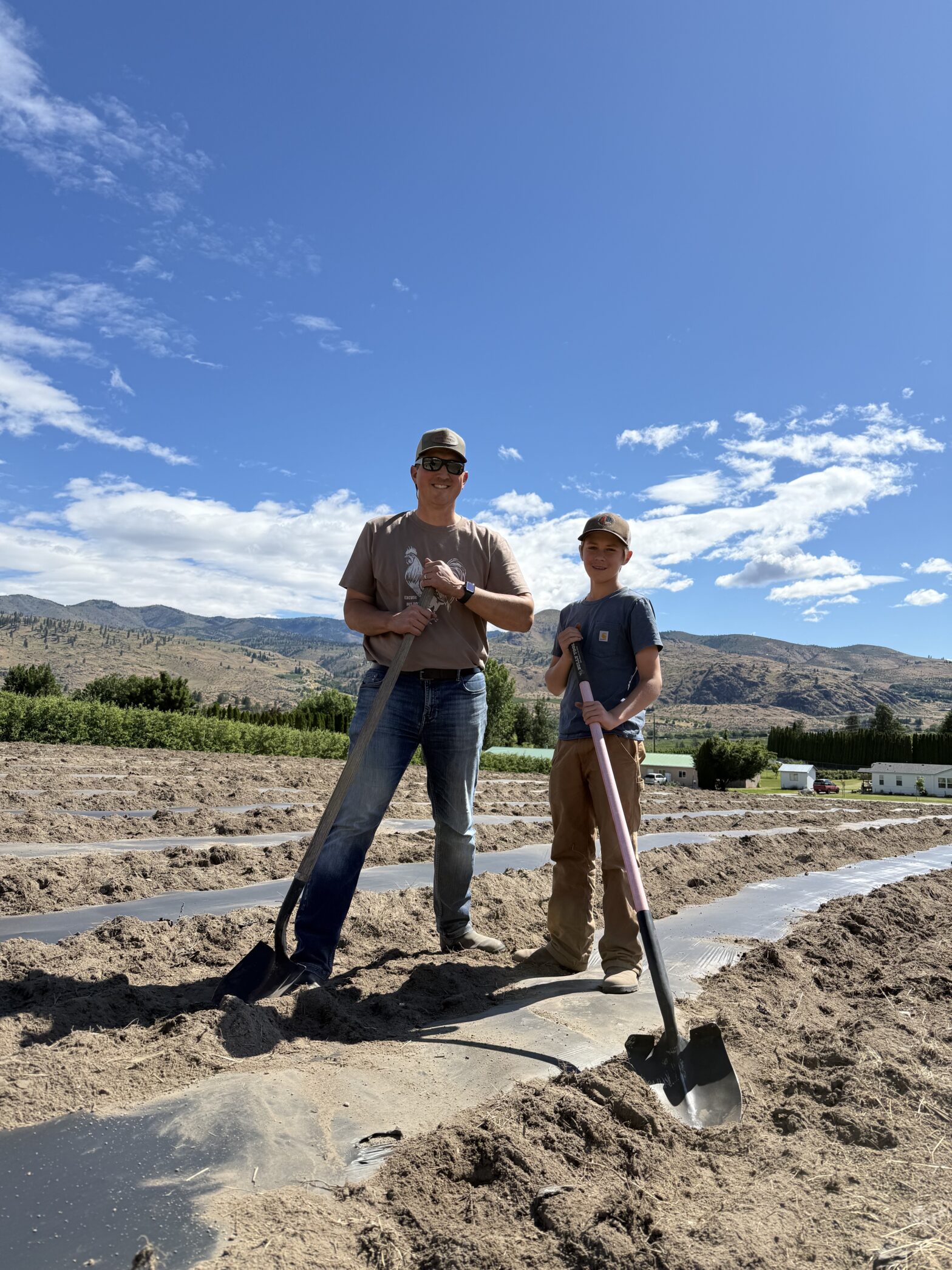
Last weekend a friend caught me in the act: the no-till guy, standing in his own tilled field. This is the explanation I owed him. by Chad
Last weekend, the boys and I spent both days in the pumpkin patch. We were using our specialized equipment to lay plastic mulch and drip tube down for the pumpkins. After wrapping up the 6th or 7th row, Jeana showed up with some donuts and a good friend stopped as he saw what we were doing… morning light and shadows floating across the hills and field, the boys digging into donuts and a welcome rest. Our friend reminded me – Chad, you have been saying “don’t till your garden” and look – this field is pretty well tilled.
“You know Stephen, we’re soil hypocrites.” He chuckled — “oh that’s good.” “Yeah,” I said, “I’ve been thinking about writing on it. It’s worth explaining.”
Tillage and soil health are at odds. And since we chose not to use herbicides, our only option was to use plastic. Hand weeding simply isn’t an option. Which means, we rototill our pumpkin soil to a dust in preparation for laying the plastic. The dust… imagine our soils – I sometimes describe them as volcanic ash (they kind of are) – when tilled they make a fine dusty mix you can run your fingers through. A state we bring the soil to so our plastic laying equipment can run smoothly through. The equipment’s weight and blades and rollers and discs all working together to both lay the plastic and put the drip irrigation into place. Leaving the plastic on top of the soil – ready to let the pumpkins get way ahead of the weeds by being planted right into the plastic. This system has become harder and harder to swallow knowing what it does. All hope for millions of living soil creatures coming to life, building their home – lost. Even though it’s a game changer for great pumpkins.
And as Carston and I took one of the trips in the tractor – dead heading it – to the top of the pumpkin patch – so we can plant downhill, we both had the same thought staring out across the field. The plastic being laid down nicely, the rows coming together well. The humm of the tractor and movement from the bumps… I said, “Carston, I get sick to my stomach seeing our bare soil, knowing there’s got to be a better way for us to do this.” He said, “Dad, I have the same feeling looking out over the field.” I replied, “Well Carston, maybe you can help us figure it out, and we can find a way to try out our ideas for doing it differently.”
Change is hard when it’s how most people farm their pumpkins. An established and successful way that helps us grow a crop that brings such joy to all of you, at the same time is important income to our business. Without it, the weeds win.
We’ve got some serious ideas on how to do it different. It’ll require some testing. And it will require us to invest in some new equipment. But the result could mean new ways to support and build our soils health. The possibility of growing a cover crop, then crimping it – a fancy way to bend it over and plant right into the carpet of plant cover. I’m scared to try it. This spring we experimented with a cover crop… of peas. It failed, but we learned.
The path we’re on isn’t perfect. I know we’re hypocrites in some cases. It’s hard.
And — stop tilling your garden. And maybe it’s ok to be scared.
Cheers!


Love to read your blogs and all the humbling, eye opening and widely varying lessons you’re all openly learning for all of us to watch and learn as well. Guide on!!
Change and getting rid of the “old” ways of doing things doesn’t happen overnight. You have come a long way and you will succeed moving forward. I love Chelan Valley Farms and all you and your family do there. Marilynn