
I have two ag degrees from WSU and decades in agriculture — and still didn’t understand what’s happening in our soil. Until 2018. by Chad
It’s 5:09 am, I’m sitting in the lobby of a Marriott in Pullman, WA (home of WSU – go Cougs), the sun just starting to come up, the family asleep in the hotel room. Memories rushing back — spring’s cool air, long morning shadows on walks from Farmhouse to class, excited to learn, enjoying time with friends on the way. Today: corporate ag meetings and customer connections. This evening, our oldest son walks across the stage at the State FFA convention. A dad with two ag degrees from WSU and years working in agriculture about to watch his son receive his State award for his AgriScience project. Jeana and I were pretty nostalgic driving into town late last night, showing the boys where we lived and describing all the memories. But this morning, something else hit me.
I’ve spent decades in Ag around the world. I spent decades thinking I knew farming. But my knowledge wasn’t soil deep. Heck, I’ve been on many of the largest farms in the country. And as I sit here, here’s my confession – I didn’t know anything about what’s going on in our soil. The immense ecosystem that exists below our feet and in our fields is more complex than what’s above it on our planet. And our son who’s about to walk across the stage tonight knows more about this at 15 than I did at 40. We talk about kids today being digital natives. Our boys are growing up regenerative natives. I had a successful career all those years – but I was missing something fundamental about how farming actually worked.
My eyes were opened hearing that first podcast from Gwyneth Paltrow (yes, seems odd, but a Sacramento neighbor shared it saying I had to listen). It was 2018, driving on our old green tractor with my ear buds in – hearing her talk about regenerative farming and the Regenerative Organic Alliance. You know when a dog’s head crooks to the side, almost like they’re saying, “what did you say?” Yeah, that was my reaction. She was talking about minimizing soil disturbance. About bringing animals into the farming system. All because there’s a massive abundance of life in our soils, and a movement of people trying to scale these practices.
Now we’re 5 years in on some major changes at our farm. For the non-farmer, these might seem like a no-brainer, common sense things to do. This is where both my corporate ag experience and practical farming experience chime in. Change is hard. Change is even harder when your livelihood is attached to it. And it’s hardest of all when you’re not experiencing any pain — when your farming system has been successful for a long time. Now someone shows up saying – hey – you should stop spraying herbicide. Back to the dog’s head, tilted sideways. But we’ve done it. We’ve left herbicides out of the equation for 5 years. In our grapes, in our apples, in our blueberries, peaches and raspberries. Does it look pristine clean – heck no. But guess what – bare soil is DEAD soil.
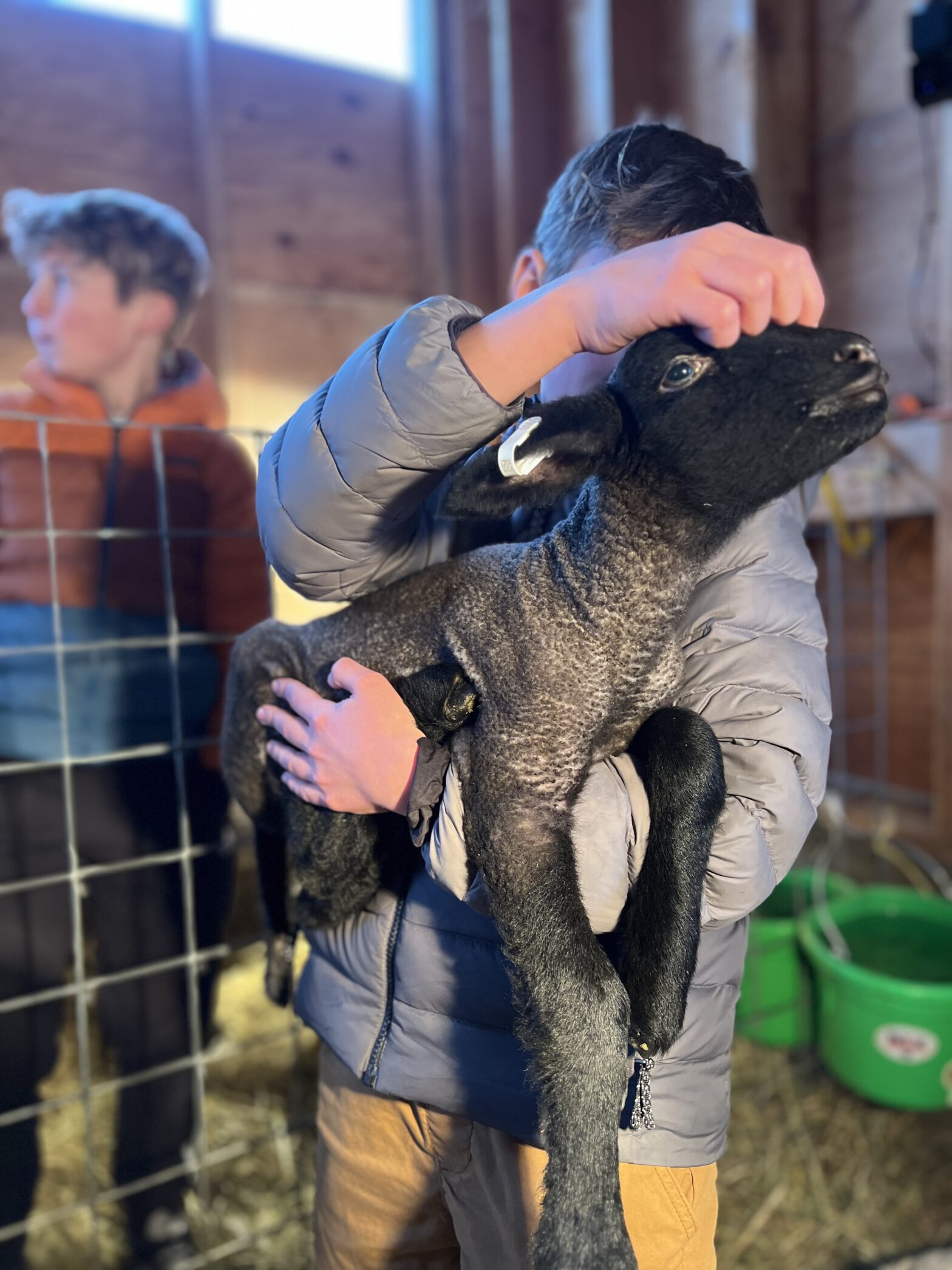
We’ve also brought animals into our farming system – enter Mr. Pile’s sheep (we wouldn’t be here if it weren’t for him). A lot of folks’ first reaction – oh, that’s great, they eat the weeds so you don’t have to mow… well, not really. These sheep get free feed, yes they eat down the cover – but they also deposit magic manure that the soil loves. The other major thing – we’ve been farming organically for 3 years now. I never thought I’d say that or consider it. We’ve seen our populations of beneficial insects explode (think lady bugs). We’ve also had some nail biters – coddling moth pressure high enough to collapse our apple producing viability. But we’ve kept with it. And there’s no way we could do it without Wilbur Jim and Wilbur-Ellis Agribusiness.
We’re NOT doing these things to impress anyone. We’re doing them because we’re excited about what we’re seeing on our farm – and ultimately to build equity in our soil.
Today’s a big day. Carston gets to follow in his mom’s footsteps of going to State FFA convention as a freshman. His brothers get to come along. As I sit here picturing him walking across that stage, the thing I keep coming back to is grace and humility. We’re going to get a lot further if we find ways to be supportive and not villainize people or the system or farmers or big ag. Get real – we need everyone I just mentioned to breathe life and vibrancy back into our planet’s soils. Yes, all of them. It’s the soil we need to focus on. I’m here to share my ignorance — and my absolute passion for what’s possible. It’s crazy to think – the soil has everything it needs to support plants without our help – if we keep learning how to provide it the right support.
Cheers!


Great read. Reading this brought back so many memories!So proud of all of you.
Thanks!!! It was fun to show the boys Pullman.
Go Carston!!!
Thanks!!!
Well brother I’m in your shoes. Been an agronomist for 30 years. Got my 2 degrees as well and I’m re-thinking everything I learned and thought I knew about the soil, agriculture and the system we have been using.
Yes our sons and daughters are gonna lead this revolution into the future.
It’s really an inspiring time, totally inspiring… Glad to be in this together.
Bravo, Chad! Thank you for writing about regenerative agriculture and its importance for our food and planet! And kudos to you and to Carston! Welcome another generation of responsible farming. Gives me hope for the future!
Morning Julie!!! thanks for the nice comment. And thanks for jumping into the regenerative conversation so whole heartedly. It’s a movement 🙂 Regenerative natives – the family listened to carbonomics on the drive from pullman to seattle…