
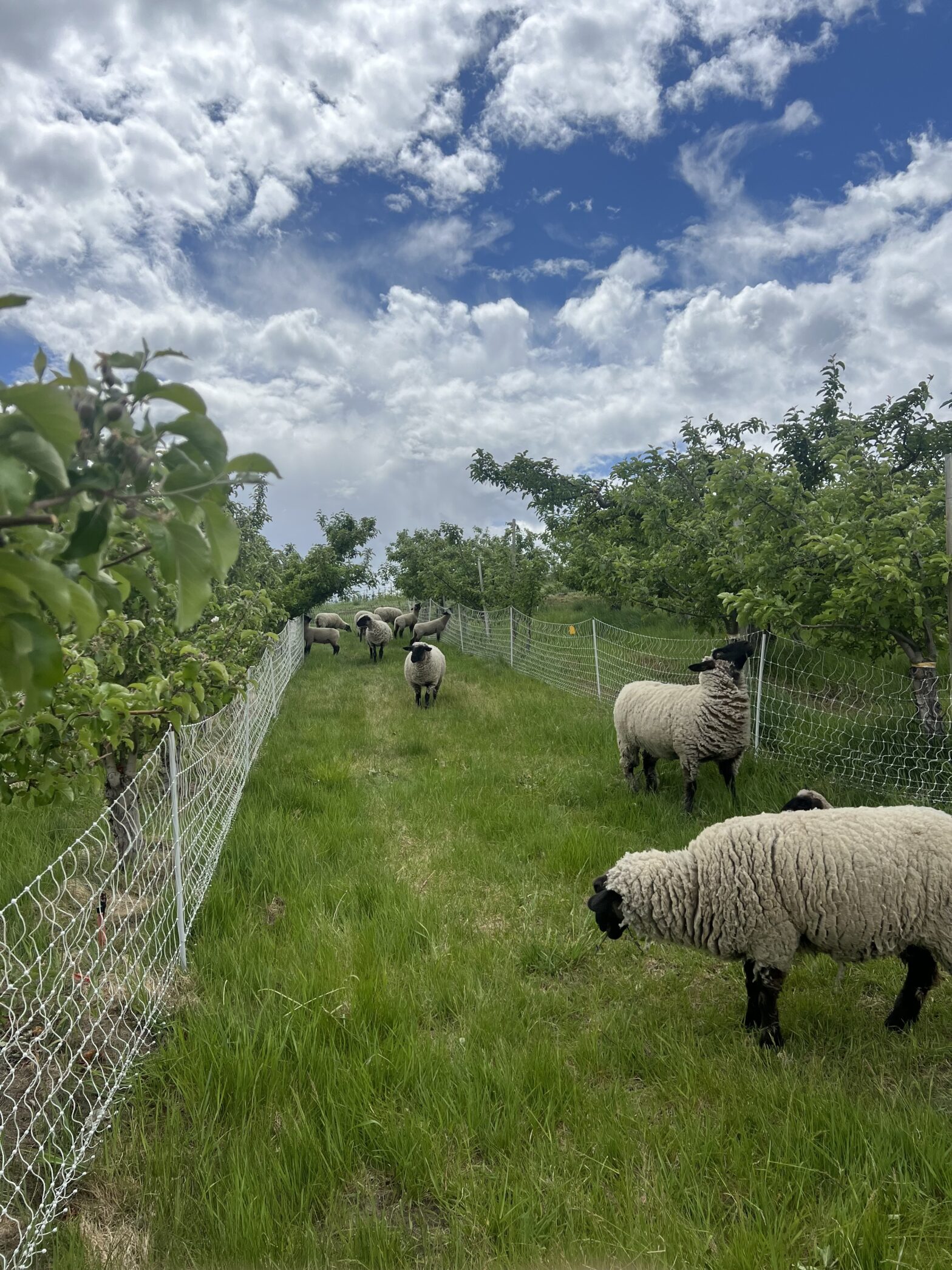
We chose a regenerative path believing we were doing things right – then the soil showed us we still had more to learn. by Chad
A step back before we begin
When we first started farming our vineyard and orchard, we farmed in a very common and traditional way. Herbicide in the vine rows, frequent mowing, conventional fertilizer. No grazing. It’s a system that many farms rely on, and for good reason – it’s efficient, predictable, and has helped produce a lot of great food and great wine over the years.
Over time, we began to see and learn about a different approach. One that wasn’t focused solely on managing plants above ground, but on building a living ecosystem below it. A system centered on soil biology – roots, microbes, organic matter, and the relationships between them. The idea wasn’t that one way was “right” and another was “wrong,” but that there were simply different paths, each with tradeoffs.
We chose to begin moving down a path that emphasized soil health, diversity, and regeneration. Not because we believe conventional methods are bad, but because we were curious – curious about whether building a healthier soil ecosystem could help us grow healthier vines, healthier fruit, and ultimately deliver better wine. That curiosity is what led us to sheep, grazing, and a much more hands-on relationship with the land. Which brings us to this story – one about learning, humility, and realizing that even when you choose a thoughtful path, you still have plenty to learn along the way.
Sure, it sounds so smart and sustainable like we really know what we’re doing. But shit, we messed up.
We’ve been raising sheep and grazing them all around the farm – properly. Simple, right? Move fence, move sheep, repeat. May all our regenerative farming dreams come true. Nope, we’ve been doing it wrong (which means we’re learning to get better). It’s been easy – sheep-wise, they’ve had all the green grass they can eat from April through November-ish. In this case, messing up almost feels like a victory, a romantic story of bringing our soil to life. And for me, it connects to a larger theme – moving forward, and our intention for 2026 – leaving survival mode.
So… how did we mess up?
We have 9 ewes and 13 yearlings. First, let’s level set. This is a first-world problem and a small-scale one. We live in a biological world – one that is constantly responding to what we do. You may be thinking, “Gosh, how can you mess up sheep grazing?” The goal with the sheep in the vineyard and the orchard is healthy soil. I equated much of that to keeping down weeds and assuming manure is like magic for the soil and the critters in it – the good critters, the microbes that make the soil, and ultimately the wine, taste better.
Nope, there’s more to it, and we missed it.
It turns out our orchard and vineyard soil is covered mostly with clover and grass. Here’s the “mess up”: we’ve been leaving our sheep in one spot too long. Sometimes we’d leave them in one place for seven days, or until the food – grass and clover – was mostly gone. We thought letting them get close was okay. Not totally gone, still plenty of green left. What felt quick to us wasn’t quick enough. There was still plenty of grass and clover looking okay, and we were excited – thinking we’d successfully rotationally grazed. Wrong.
The sheep were happy and healthy. The soil, however, was left hungry. We weren’t helping the plants build soil capable of producing finest of fine wine – not to the level we want to be. But dynamically different than we used to (think heavy mowing, no vegetation in the rows, etc).
Stick with me, I’m excited to see if this resonates. We’re still learning. This is just one rung on the ladder.
So what is “the way”?
If soil could cry like a baby when it’s hungry, it would be crying out for carbon. Carbon is the primary fuel source for soil life. Dead plant material, roots, manure, compost – all of it matters, but not by itself. What really feeds the system is living plants pumping carbon into the soil through their roots. Imagine those roots pushing food below ground. That food feeds the microbes – the ones doing a huge amount of the work underground – and those microbes are what ultimately build stable organic matter. This is how organic matter gets built. This is “the way.”
Here’s where grazing comes in.
Quick grazing is not eating all the food in front of you – like we’d been doing. Sheep come in, nibble off the top growth, trample some plants, deposit manure, and move on. Plants aren’t eaten down to nothing; they’re stimulated. That short grazing window triggers regrowth, and at the same time, plants push more carbon below ground through their roots. Then the sheep leave. The plants recover. The soil gets fed.
Fast grazing with a long recovery period – everyone wins. The plants, the microbes, and soil organic matter are all happy.
What we thought we were doing was moving the sheep in, letting them clean things up and return nutrients to the soil. What was actually happening was that plants were being grazed multiple times while trying to regrow. Roots were shrinking. Food for the microbes was being cut off. The soil was stressed. We weren’t feeding the soil. We were slowly starving it.
So what changes now?
In April, we’ll move the sheep and all 13 lambs into the vineyard – 22 animals total – and we’ll move them more frequently. We want them to dine on our grass and clover once, not two or three times. We’ll change how we move them as well – high impact, quick moves, not multi-nibbling passes.
We’re excited about these learnings and where they’ll take us, and we’re thankful for those who’ve helped us learn – John Kempf and Jon Stika among them (read some of my related prior blog posts: Fear and Farming, Is Sustainable WA Worth Supporting?).
But what I really want to end with is the connection beyond the sheep.
This learning hit us as more than an agricultural lesson. It became a mirror. When growing this business has sometimes taken control of us – rather than us taking control of it – we saw the parallel. We are in charge of how long we let the sheep graze. We just have to move them.
As I’ve headed back to work, it’s got Jeana fired up to lead our business. And it’s got me fired up to plug back into the bigger agricultural picture.
This learning with the sheep showed us where we’d been stuck – and what it looks like to keep moving forward. These changes are moving us forward. It feels like the sheep, the soil, and us are all moving forward – out of survival mode and into a phase of regeneration, full of life.



I’m speechless. You are learning and growing so fast in this venture and recognizing what does and doesn’t work I’m out of breath. I have nothing to say except eat moving the way you’re going .
Well, we’re speechless b/c of your speechlessness. You rock Karen. We’re so excited to keep going!
Your commitment to your farm and family is amazing. The amount of energy and dedication you put into your piece of land is inspiring and I wish that I was 30 years younger so I could join your journey. Take care and be safe.
Mark!!! How are you! We look forward to seeing you soon. And are so glad your part of the Roses Lake community. And comments like this are fuel to our fire – thank you. and thank you for your support since the beginning!!! You rock!
I love your transparency about all things farming! Reading about your experiences and your own ‘aha’ moment got me thinking about my garden and plants and yard and the ways I can further stimulate healthy growth for my own little growing season.
More than that, though~thank you for taking your readers and fans of what you’re doing through your very real learning experiences. I love your family’s honest way of living and learning. So inspired by you guys!!
Darci. This couldn’t be more inspiring. I’ve got a book for you next time we see you (the 2025 Estate Chard gets bottle in a month). Our soil is completely alive – AND if we care for it properly – it’ll provide us with more nutrition in our food and natural defenses. Our next big step is to put cover crops every where we can – trying to never leave the soil bare. And do as much as we can to eliminate tillage. Thank you for the very nice comment.
Bravo! As a wise person once said, “The only ones not making mistakes are the ones not trying anything new!” You go!
Thanks Julie. What a gift it is!! Excited to keep making progress. Oh, and Carston interviewed the authors of What Your Food Ate this week. Pretty cool. He was so excited.
Fun keeping up with goings on in Manson while down south. Great piece, I would just change the word “messing up” to learning. 😊
Thank you so much for following along. We’ve had some blue skies here today. messing up = learning = magical. with you 100% – so grateful to have the opportunity to jump in and learn.